
Glass and stone come together to create a unique blend of texture, colour and style that contributes to the contemporary interior design ideas we often see in kitchens and bathrooms today. This particular combination is capable of enhancing both the vigour and relaxation of any average space. With the decorative addition of stone and glass mosaics in your home, you are sure to achieve the major artistic statement you’re looking to portray. Here are a couple of ways to bring glass and stone together in your home.

Example 1 – Liven Up Your Bathroom

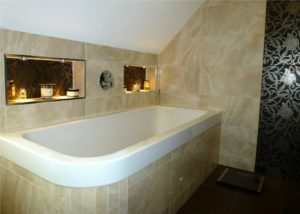
If you use some dazzling glass mosaics on the walls in your bathroom and compliment them with stylish stone flooring, you can create a stunning contemporary interior that offers a range of qualities, from the sparkling nature of the glass to the natural effects of the tiling. You can also immerse yourself in an abundance of natural light thanks to the reflective qualities of the glass.

Example 2 – Mix Up the Shapes and Sizes of Your Tiles

Glass tiles come in all different shapes and colours, which is why you can use them to add aesthetic appeal to any tiled or painted wall. An earth-toned glass mosaic finish with the addition of clear, beige or creamy tiling creates a hugely appealing contrast of colours and finishes. Mosaic tiling on the floors compliment this outstanding wall design and you can create a distinctive look by going for a number of different colours.

Mosaics can offer your garden patio vibrant, complex colours as well as a little something different to your standard patio tiling structure. We’re set to experience some beautiful weather this weekend, so there’s no better time to  start a fun DIY job with stone mosaics.

Not only is it something that will benefit your garden, it’s also an enjoyable activity for the whole family to get involved in. Here’s what you’ll need:


Mosaic Tiles/ Broken-up Tiles

– Pliers

– Diluted Glue

– Grout

– Measuring Tools i.e. sketch, spirit level


 Step 1

Depending on your preferred shape, use a template such as a circular bucket to sketch a design

Step 2

Start placing your natural stone tiles or mosaics onto the paper and glue down when satisfied with your design

Step 3

Place the mosaic template you have made face down in an oiled bucket and pour the mixture of water and cement in afterwards until your each your desired thickness

Step 4

Make sure the surface of the cement mixture is flat and leave to dry for a couple of days

Step 5

After two days, remove the mold with some pliers and you should be left with a beautiful garden mosaic for your patio or garden path!

As we get closer to winter, the opportunities we get to start decorating the outdoors with natural stone start to decline. Instead, you might find yourself carrying out many more interior tiling jobs, whether it’s kitchens, bathrooms, table surfaces or floors.

There are plenty of tiling add-ons to seek out that will further improve your interior tiling jobs during the winter. For example, you might be wondering how you can further enhance the insulating properties of your tiles in preparation for the colder months.

Insulation Boards

This is what most people will turn to if they are keen to improve insulation throughout the property. When laying a natural slate flooring for instance, the insulation board helps to prevent heat loss and saves energy in the long run.

They are usually waterproof and can be used with both walls and floors. Insulation boards work by reflecting heat back up through the tile.

There are also a number of tiling finishes available on the market today that perfectly resemble the specific time of year, including wooden ceramic finishes. Another hugely popular tiling choice during the autumn and winter is slate, which offers durable porcelain material and low maintenance properties.

To learn more about our tiling range and tile fitting services here at the Stone Tile Emporium, call us today on 01737 201125. From tomorrow, you can visit our brand new shop in Bell Street, Reigate and explore our wide range of natural stone tiles and mosaics.

The Stone Tile Emporium Shop Front

The Tile Emporium are proud to be launching our first showroom on Reigate high street as well as our brand new website.

Our Showroom is located on Bell Street, Reigate making it easily accessible with Morrisons car park just across the road.

We have been an established company for over 10 years and have built a large and varied client base including many local building firms, contractors and interior/exterior designers.

We operate from Guildford to Sevenoaks with Reigate being our base. We also work in London and further away depending on the project. Email us with details abut your project and any queries you may have.

Our new blog will be frequently updated with information about our latest products, offers and services as well as advice about looking after and caring for your tiles. Make sure to keep track regularly of our blog for updates. We welcome any feedback and should you have any questions regarding our services you can contact us on 01737 210125 or by filling in our contact to the right.

Christmas is on its way so you might be planning to treat yourself with brand new tiles for your bathroom or kitchen and have your home looking great in preparation for the big day.

If you find yourself in the market for some new tiles or feel you might struggle with the wide variety of textures, styles, themes and materials on offer, here’s a few handy tips to consider before investing in your festive stone tiles.

1. Consider the location of your tiles

Firstly, consider where the tiles are going to be placed and how their texture, colour and style will affect the look of the space. For example, lighter tiles would be ideal for a space that needs to look bigger due to its size and you might need a specific texture if your style preferences are particularly detailed.

Slate provides an excellent natural texture that works wonders for your bathroom, whilst the dark, sleek design of marble tiling can really work in a more contemporary kitchen space.

2. Consider the durability needed

It’s also important to consider the durability of your tiles. Are they capable of lasting a considerably long time without getting damaged? Can they withstand cleaning products for the foreseeable future?

Ultimately, the life of a tile can be daunting depending on where it’s situated but it’s worth considering this important factor when purchasing nonetheless.

3. Think about the long-term

Finally, try and have a long term bathroom plan in mind when buying your tiles. How are your style preferences going to change in the next few years? What sort of bathroom appliances will you be investing in? It’s a good idea to look at some kitchen and bathroom design ideas beforehand so that you can see where your new tiles are likely to lead you.

Don’t forgot to visit the Stone Tile Emporium for an introduction into the wide range of tiling ideas we have to offer!

With kitchens being one of the most popular rooms for stone tiling, you can expect your cherished tiles to be affected by the daily kitchen routine. Over time, tiles can become dirtier as a result of frying food nearby and this can lead to long term staining. In addition, your tiles could get ruined before you’ve even had a chance to enjoy them if you haven’t applied an effective sealant beforehand.  Here are a few ways to deal with stone tiles that have attracted stains and gathered dust over the years.

The most effective way of cleaning stone tiles is to use a mop. You can create a solution yourself that will get rid of any stains that have resided for months or even years. First off, equip yourself with a broom and sweep up the dust that has collected on the surface. Use a dustpan for any difficult areas that need to be freed of dust.

The next thing to do is to get a bucket of warm water. Mix the water with a mild detergent or a soapy substance that is intended for cleaning stone. With mop in hand, press it into the bucket of solution and target the areas of the flooring that have accumulated the majority of stains. Mopping helps to get rid of any collected dirt that has gathered in between the tiles themselves. It’s important that you empty the bucket of dirty water so that you aren’t just applying dirty water back on to the tiles.

After mopping, dry the area with a cloth or leave it to rest for an hour or so. The cleaning solution will take effect and those troublesome stains will be gone. It’s as simple as that. Make sure you check that your specific stone tiles, whether it’s marble or limestone flooring, are capable of working well with the solution that you use.

You might have just finished tiling your bathroom walls or wiping over your newly installed floor tiles in the conservatory and realised you’ve got a bunch of spare tiles left over. Before you decide to chuck them in the skip, here are a few alternative uses for stone tiles that might appeal to you.

Coasters

This is a great option if you’ve got some stylish tiles that simply can’t go to waste. Tiles like this can be great for table coasters as they are but you can also fit rubber material underneath to provide solidity. Varnish them for extra longevity.

Borders

You might have a mirror fixed to the wall in your home that looks a bit plain at the moment. Never fear, as a spare set of stone tiles can provide the perfect canvas for a decorative border. Plain tiles can be painted or even sculpted for added effect.

Mosaics

Stone Tile Emporium have a great selection of stone mosaic tiles on offer but if you fancy having a go at it yourself, why not take your spare tiles and become a bit of an artist? Create some pretty mosaics that suit you or loved ones preferences for a great gift idea.

Tabletop

If you’ve got a tabletop without much sparkle or attraction, have a go at painting some designs for a truly unique tabletop. From a small garden surface to a larger living room table, this is a great way to establish your own personal tastes in your home.

If you’ve decided to get your spring cleaning done a little earlier this year in an attempt to beckon the nicer weather towards us, you’re probably going to have to concentrate on the stone tiles in your bathroom, kitchen, tabletops or conservatory. Here’s a quick guide to getting your spring cleaning done quickly and efficiently.

The first thing you should do is sweep away any dust particles or unattached dirt from the flooring. Once you’re certain the surface is clear, you can reach for the mop. If you’re finding the sweeping process a bit tedious, try vacuuming instead.

The next step is to mop the floors of any sticky substances or short-term stains that have built up. Sticky substances that are too tough to remove with a mop can be scraped off the floor with any kind of scraper. Depending on the floor tiles you’ve got, you should try and find the cleaning solution that works best.

Once you’ve finished mopping up, you can leave the floor to dry for over an hour or so. It really is as simple and as straightforward as that. Remember, cleaning solutions for certain materials such as slate, granite and limestone can be found and purchased online or in any specialist cleaning store.

There are plenty of benefits that go with using natural stone cladding as a character feature in your home. You can get a wide range of visual benefits from having it in bathrooms, living rooms, kitchens and various other parts of a property.

Stone cladding is often used to surround fireplaces, making it a focal point of any living space that relies on this traditional form of heating. Here are a few reasons why natural stone cladding has become popular in both grade-listed and contemporary properties.

Stone cladding offers you a unique opportunity to bring character often associated with the outdoors into the property itself. This natural appearance is capable of changing the entire atmosphere of a room, from bedrooms and bathrooms to living rooms and dining areas.

What’s more, you can get a variety of new textures from your wall with all sorts of slate finishes available on the market.

Stone Cladding is also extremely durable, so you don’t have to concern yourself with worries about scratches, marks or chips in slate cladding.

Moreover, it would seem logical to take extra care of your stone cladding as it can play a vital role in improving the character of your property. Also remember that natural stone is often equipped to work alongside fireplaces where burn marks are possible.

Mosaics are a wonderful alternative to standard tiling, especially if you’re looking to enhance the character of your property. Mosaics are commonly found in bathrooms, bedrooms, kitchens and even some reception rooms, so you won’t struggle to find somewhere where you can have them.

You can purchase some of the wonderful glass mosaics we have to offer here at the Stone Tile Emporium but if you’re keen to make your own, here’s how to prepare.

If you’ve managed to keep some natural stone tiles such as limestone spare after a separate job, now’s the time to use them. You can sue all kinds of different materials when creating your own mosaics, from natural stone and glass to broken china and even seashells. Once you’ve collected your materials, you’re ready to begin!

Depending on the surface you have in mind for your mosaic, you need to choose a foundation. If you’re creating a mosaic for a tabletop, you need to ensure that the top is sturdy enough. It’s a good idea to give any foundation you choose a thorough clean beforehand as you’ll be using grout and mortar when piecing together your materials.

Try and draw your preferred pattern on the surface first so that you’ve got a plan beforehand. This will make your end product much neater and you can come up with some really detailed ideas using this method.

The final step of your preparation phase is to get hold of some mortar. Mortar is used throughout construction to hold concrete bricks together and it works just as well with mosaics. You can purchase mortar in many retail stores and mix it using manufacturer recommendations if you’re confused.

Best Price Today

Contact Us

Please get in touch using the form below

"*" indicates required fields